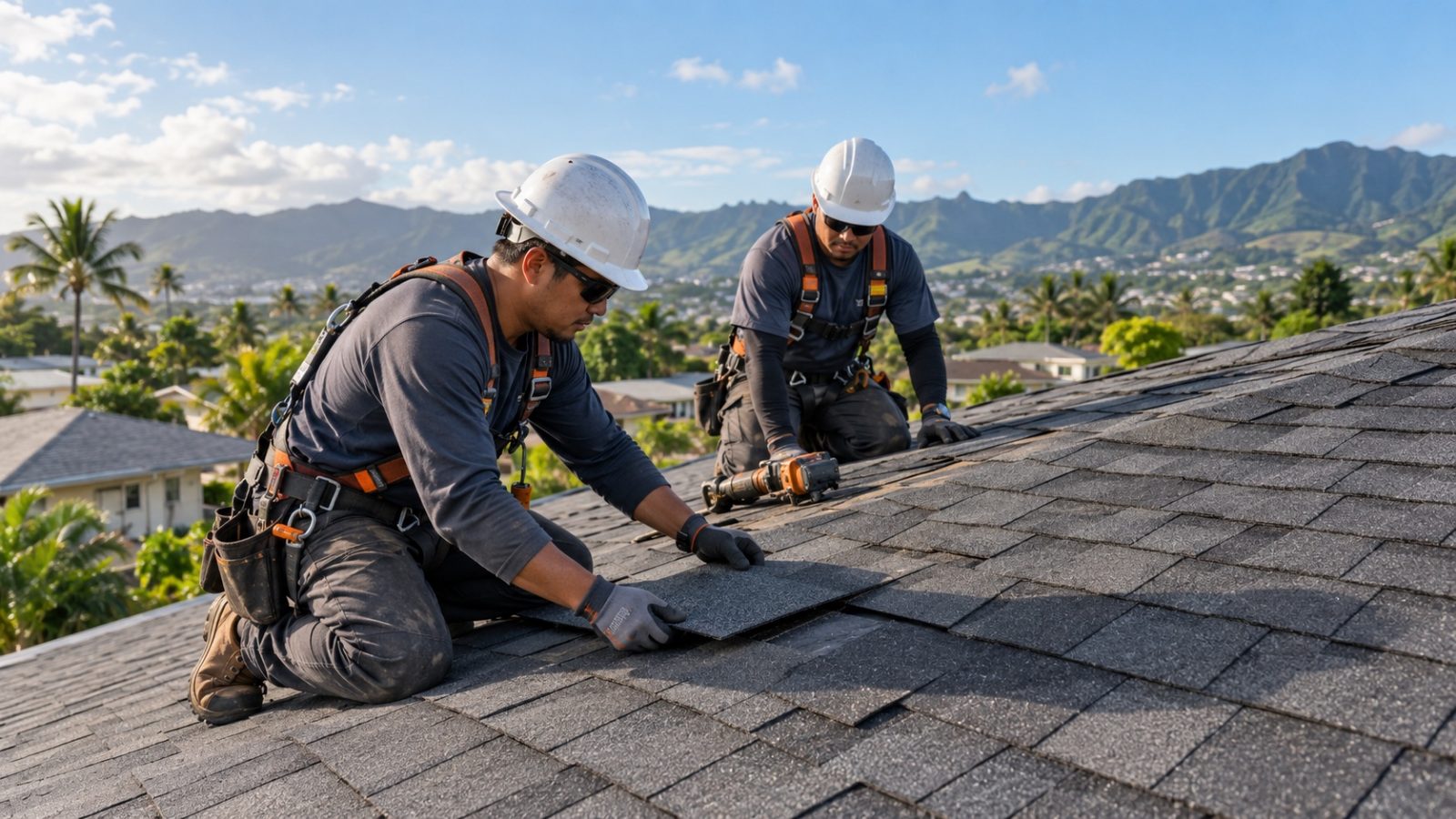
Local Roof Repair Throughout Oahu
Reliable Roof Repair in Pearl City, Hawaii
Protect your home with practical roofing solutions. Tell us what is happening with your roof and request an estimate today. Get a Free Estimate
Local Roof Repair Throughout Oahu
Protect your home with practical roofing solutions. Tell us what is happening with your roof and request an estimate today. Get a Free Estimate
When your roof develops a leak, loses shingles, or shows signs of damage, it can be difficult to know how serious the problem is. A small opening around flashing or a damaged roofing section can allow moisture into places you cannot easily see. Getting the issue checked early can help limit interior damage and prevent a manageable repair from becoming a larger project. Pearl City Roof Repair helps homeowners throughout Pearl City and Oahu address roofing problems with clear explanations and repair-focused service.
Our primary service is roof repair, including roof leak repair, emergency roof repair, shingle roof repair, tile roof repair, flat roof repair, and roof flashing repair. We work with homeowners to identify the source of a roofing concern, explain the repair approach, and provide an estimate based on the condition of the roof. Whether you have noticed a ceiling stain after heavy rain or visible damage following strong winds, we want to make the next step straightforward.
Oahu homes have to handle sun, rain, humidity, and wind. Those conditions can show up as leaks, worn materials, or damaged details around the parts of a roof that move water away from the house. The right repair depends on the roofing material, the condition of the surrounding area, how the roof can be reached, and where the water is actually getting in. We begin with the problem you can describe, then talk through what a closer look may involve.
Homeowners deserve understandable answers when something goes wrong with their roof. Oahu homes must handle sun, rain, humidity, and wind, and those conditions can show up as leaks, worn materials, or damaged details. We focus on understanding the reported problem, practical repairs, and communication that does not leave customers guessing.
We believe roofing work should begin with understanding the problem rather than automatically recommending the biggest project. We take the time to discuss visible damage, explain potential water-entry points, and identify what needs attention. We serve Pearl City and surrounding Oahu communities with the same straightforward approach: respect the home, explain the work, and help the homeowner make an informed decision.
A visible stain on a ceiling does not always sit directly under the opening in the roof. Water can travel along roofing materials, framing, and other surfaces before it shows up indoors. That is why a repair conversation starts with what you are seeing, when it happens, and what the roof is made of, if you know. If more assessment is needed before a recommendation is clear, we say so rather than guessing.
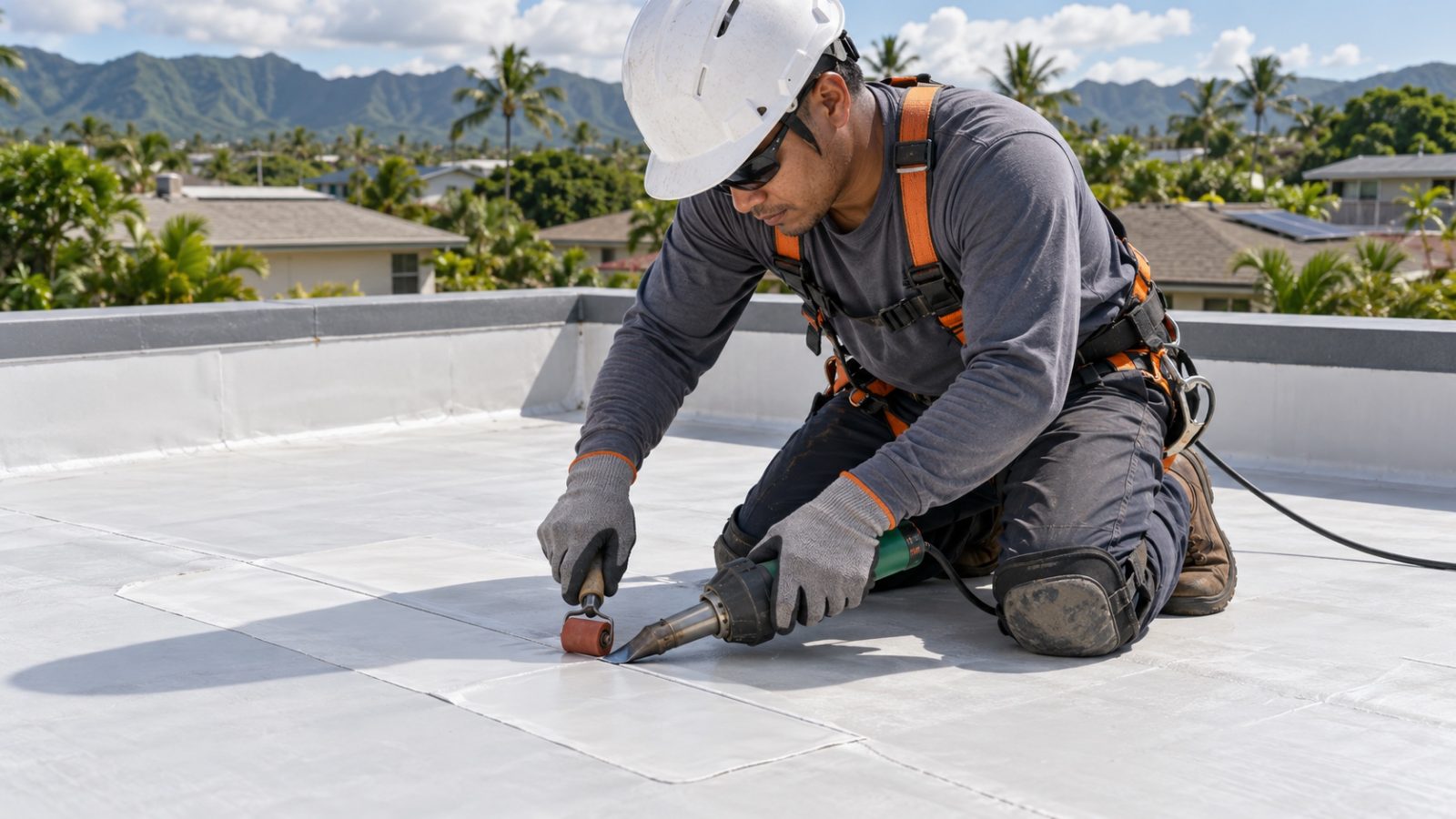
A roof leak can appear as a brown ceiling stain, peeling paint, damp insulation, or water dripping during rainfall. In some cases, the actual entry point is several feet away from the interior damage. Water can travel along roofing materials, framing, and other surfaces before becoming visible inside the home. Roof leak repair at Pearl City Roof Repair is focused on locating the likely source of that water and talking through repair options that fit the roofing system, not on treating the stain by itself.
Common concerns include damaged shingles, cracked tiles, deteriorated flashing, roof penetrations, and worn areas around drainage details. Vents, pipes, and other openings need seals and surrounding materials that are still doing their job. Loose or deteriorated flashing around roof edges, walls, chimneys, and penetrations can let water in even when the field of the roof looks intact. On flat and low-slope areas, persistent ponding, blocked drainage, and deteriorated membrane sections deserve the same careful look, because the water may be sitting on the roof long before it shows up inside.
Oahu homes see regular rainfall, strong sunlight, humidity, and periods of wind-driven weather. Those conditions can open weaknesses in roofing materials and connections over time. Sealing only the visible symptom may not resolve the underlying problem. Aging seals and worn components can be part of the story, and a leak may mean one detail needs repair or that nearby areas should be evaluated at the same time. The right solution depends on the roofing system and how far the damage extends.
If water is actively entering the home, describe that when you contact us so urgency and availability can be discussed. Share where the moisture shows up, when it happens, and any exterior damage you can see from a safe place. We consider how water may travel before it appears indoors, and we match the repair conversation to the existing materials. Addressing a leak promptly can help reduce the chance of more moisture damage to ceilings, insulation, and interior finishes. A free estimate is based on what the roof actually needs, not on a published price.
A sudden roof leak, wind-damaged roofing material, or a visible opening can put a home at risk of more water intrusion. When the problem shows up during heavy rain or after strong winds, the first priority is protecting people and limiting further damage. Pearl City Roof Repair accepts inquiries about urgent roof repair needs throughout its Oahu service area. Emergency roof repair may involve assessing visible damage, discussing temporary protection, and planning permanent repairs once conditions allow.
The appropriate response depends on the weather, roof accessibility, the extent of the damage, and available scheduling. We do not recommend climbing onto a wet or damaged roof. If water is near electrical equipment or a ceiling looks unstable, keep clear of that area and contact the appropriate emergency professional. We ask about active water entry, visible openings, and immediate concerns so the nature of the problem is clear before anyone talks about what can be done safely.
Urgent problems take different forms. Water entering living spaces can damage finishes and belongings. Missing, lifted, or displaced shingles can leave a section exposed and may need temporary protection as well as a later permanent repair. Cracked or displaced tile can expose the layers underneath, and safe access plus the condition of adjacent materials affect the approach. Impact damage or displaced materials can leave an opening; the immediate objective is to evaluate that opening and discuss protection. A sudden failure around a roof transition or penetration may also let water in and needs the surrounding materials checked.
When it is appropriate, temporary measures can help limit further exposure until permanent repairs are possible. Weather and roof conditions affect what can be done safely, and we do not promise unsafe access or immediate completion. Once the immediate concern is understood, we discuss the permanent repair scope and any related damage that may need attention. Availability is not guaranteed. Tell us what happened, whether water is still coming in, whether materials are visibly displaced, and where the property is.
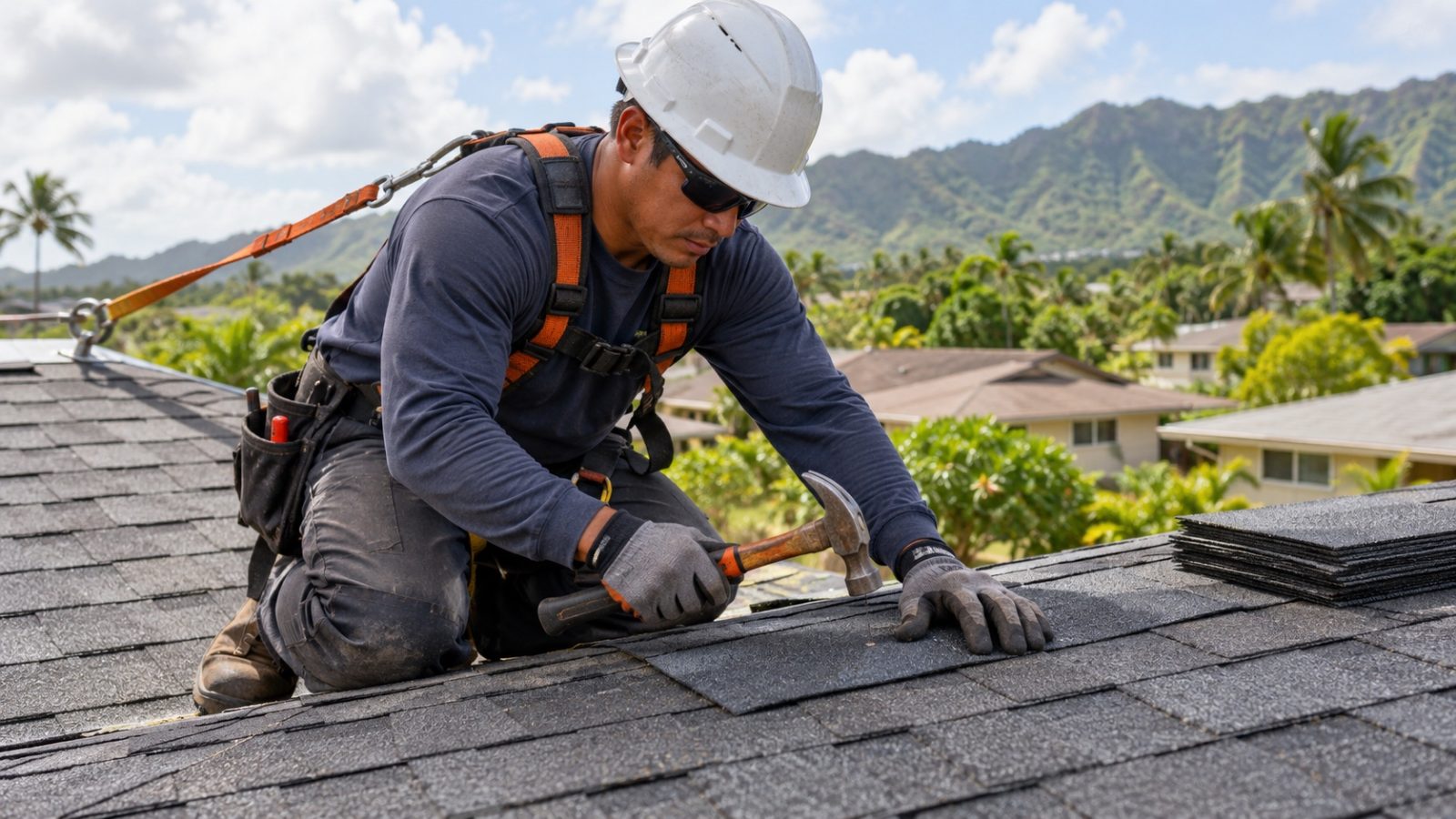
Shingle roofing can develop problems when individual shingles become cracked, loose, lifted, or missing. Those issues may come from weather exposure, aging materials, installation details, or damage from falling debris. Even a small damaged section can allow water to reach the underlying roof system, especially when the surrounding materials are already worn. A shingle roof is a system of overlapping materials meant to shed water, so a repair has to consider the affected shingles and the components beneath them.
Missing shingles can expose the underlayment and the roof deck. Cracks and breaks interrupt the water-shedding surface, and the amount of deterioration decides whether individual shingles or a larger section needs attention. Shingles that no longer sit correctly may be more vulnerable to wind and to water getting underneath. A leak on a shingle roof may involve the shingles themselves, the underlayment, flashing, or a roof penetration. We do not assume the shingle surface is the only cause when water is already showing up inside.
Pearl City Roof Repair helps homeowners with localized shingle roof problems throughout Oahu. We look at the condition of the affected shingles, the surrounding roof surface, and the underlying components when we discuss options. The goal is to see whether a targeted repair is suitable and whether related concerns should be handled at the same time. Uneven wear, damaged edges, and worn sections can all point to work that is limited to one area, or they can show that the wider roof condition should be part of the conversation.
A damaged shingle is sometimes part of a larger area of wear, so nearby materials matter. When the roof's condition allows, a localized repair may address the problem without work across the entire roof. We also explain material considerations and any limits involved in matching the existing roofing. What the work involves depends on roof pitch, height, access, shingle type, material availability, and the condition of what is underneath. An estimate is needed before any project figure can be set. Tell us whether shingles are missing, cracked, lifted, or tied to an interior leak.
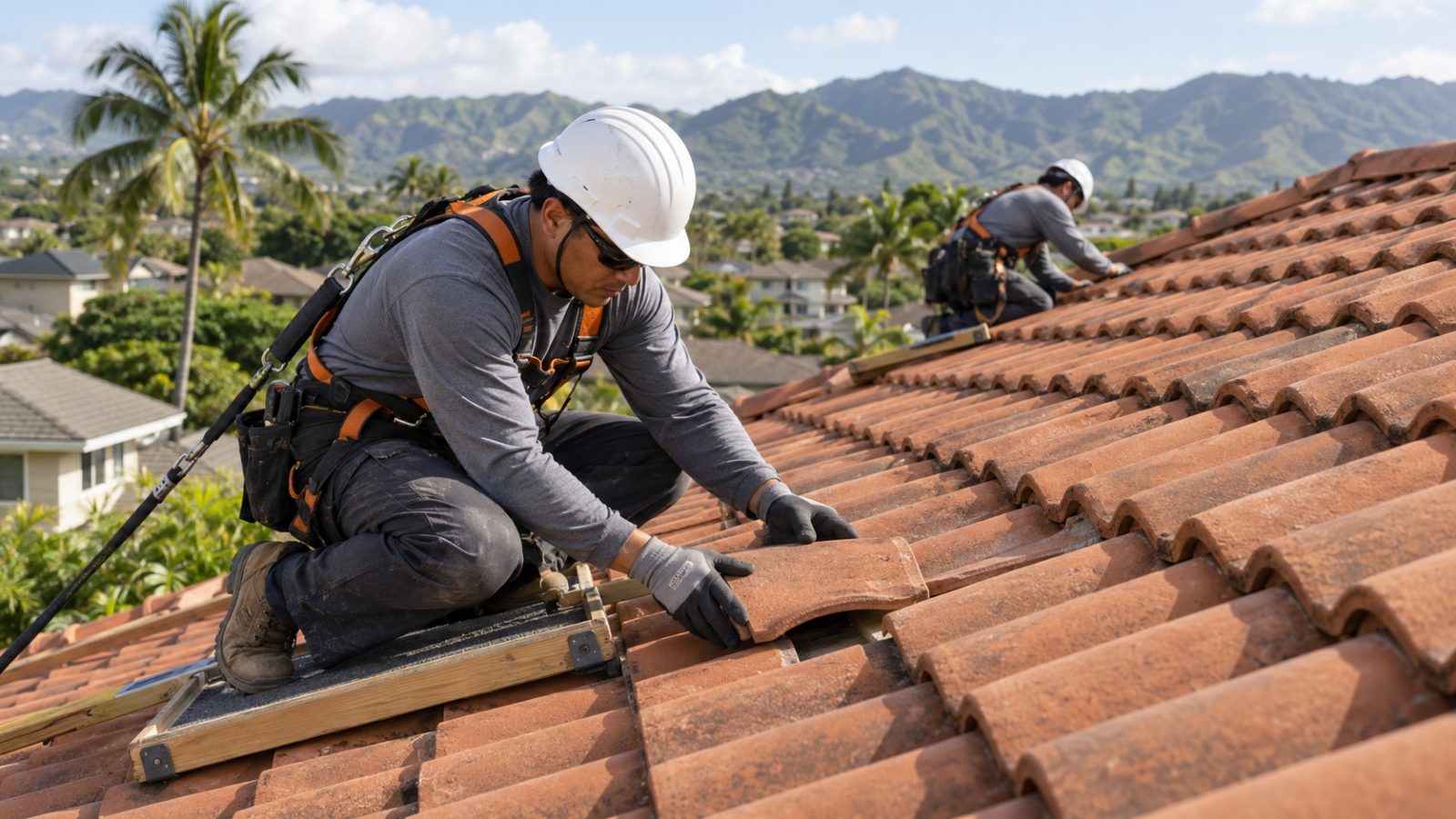
Tile roofs need attention to both the visible tiles and the materials beneath them. Individual tiles may crack, shift, or become displaced, while the underlayment and flashing can deteriorate over time. A roof may develop a leak even when the visible tile surface looks mostly intact. Because tile can be fragile under foot traffic, assessment and repair should be handled with care rather than by walking the roof to take a closer look.
Cracked tiles may allow water to reach the layers beneath them. Tiles that have moved out of place can expose vulnerable areas, and the surrounding tiles matter as much as the piece that is obviously damaged. Leaks on a tile roof can start at damaged tiles, at deteriorated underlayment, at flashing, or at roof penetrations. The underlayment is the water-resistant layer under the tile. When that layer is worn, the work can be more extensive than replacing the tile you can see from the ground.
Pearl City Roof Repair discusses tile roof repair throughout Oahu. We consider the type of tile, the condition of the surrounding roof, access, and any signs of water intrusion before talking through a repair approach. Impact, age, or weather can affect a limited area, and we explain whether a localized repair is practical based on what is around it. Matching materials is part of that conversation, because tile type and availability change what a repair can look like.
We look at cracks, displacement, the condition of nearby tile, and the chance of damage under the surface. Access and handling are planned before work begins. If the concern is a leak, the discussion goes beyond the visible tile to underlayment and flashing. The estimate explains the proposed work and the factors that can affect material selection, including roof pitch, access, and the condition of the underlying system. These are reasons an estimate is required. They are not a published price. Share whether tiles are cracked, displaced, missing, or associated with a leak, along with anything you know about the roof's age and material.
Flat and low-slope roofs do not shed water the same way a steep roof does. They rely on carefully designed slopes, drains, seams, and a continuous waterproof surface. Damaged membranes, deteriorated seams, blocked drainage, or water that sits on the roof can contribute to leaks and to further wear of the material. A repair that only covers the spot where water drips inside can miss the way water is actually moving across the roof.
Membrane damage can be a puncture, a split, or a worn area that compromises the waterproof surface. Seams and transitions are part of the system, and separation or deterioration at those lines can open a path for water. Persistent standing water can point to drainage or slope concerns, and it may mean a drainage assessment belongs in the same conversation. Roof drains, outlets, and the waterproofing around them need to stay in working condition. Deterioration at those details is a common contributor to flat roof leaks.
Pearl City Roof Repair helps homeowners discuss flat roof repair throughout Oahu. We look at the reported problem, the roofing material, the drainage arrangement, and visible signs of deterioration before suggesting a scope of work. Different flat roofing materials need different repair methods and compatible materials. A recurring leak may involve seams, transitions, or drainage details beyond the place where water becomes visible indoors. The wider roof area is part of the discussion, not only the stain.
Tell us about leaks, ponding water, visible membrane damage, or drainage concerns, and share the roofing material and layout if you know them. The affected area, the proposed materials, and the reasons the scope looks the way it does are explained before any work is approved. What the repair involves depends on membrane type, the size of the damaged area, access, drainage conditions, and whether anything underneath has been affected. A free estimate follows an assessment of the actual roofing system. There is no set figure for this work on the site.
Roof flashing is meant to direct water away from vulnerable transitions and openings. It is commonly found around roof penetrations, walls, valleys, edges, and other places where roofing materials meet. When flashing becomes loose, damaged, deteriorated, or poorly sealed, water can find a path into the roof system. Because flashing connects more than one component, a repair may need attention beyond the metal or sealant you can see.
Flashing problems are often hard to identify from inside the house. Water stains near walls, vents, or ceilings may point to a roof transition, although other sources can be involved as well. A stain near a penetration does not automatically name the entry point. Vent and pipe flashing depends on the flashing and the seals around it staying intact. Where a roof meets a wall, damaged or separated details can contribute to leaks. Valleys collect water from adjoining slopes, so damage there can affect both drainage and protection. Roof edges need detailing that moves water away from the vulnerable parts of the assembly.
Pearl City Roof Repair provides roof flashing repair for homeowners throughout Oahu. We consider where the suspected leak appears, the surrounding roofing materials, and the condition of the flashing before discussing a repair. Recurring moisture near a vent, wall, valley, or edge is a reason to look at the full transition, not only one fastener or one bead of sealant. The repair method has to fit the existing roofing and flashing materials.
Describe where the leak shows up and whether it is near a vent, a wall, a valley, or a roof edge. We also ask about the roof type, any flashing material you can see, access to the property, and the symptoms you have noticed. The estimate covers the affected detail, the proposed repair, and related concerns that may change the scope, such as roof height, access, the condition of surrounding material, and whether concealed moisture is present. The cost varies. A specific free estimate is required before work is agreed.
This site does not publish dollar amounts for roof repair. A small flashing repair is a different kind of job from a leak that involves several areas, from temporary protection after wind damage, or from work that has to address underlayment or a flat-roof membrane. The cost varies with the material, the damage, accessibility, and the amount of work required. The way to get a figure is a free estimate based on the condition of the roof, not a number listed in advance.
The table below names the kinds of repair we discuss on our service pages. Every row is a category of work. None of them is a quote. Final cost depends on what an assessment finds, including roofing material, access, and whether related damage needs additional work. Emergency timing is not a guaranteed add-on and is not priced here. Availability, weather, access, and the amount of work all have to be discussed first.
| Kind of job | Cost |
|---|---|
| Minor localized leak repair | Cost varies. Free estimate. |
| Flashing-related leak repair | Cost varies. Free estimate. |
| Multiple-area leak repair | Cost varies. Free estimate. |
| Roof leak with interior moisture concerns | Cost varies. Free estimate. A separate assessment may be needed. |
| Urgent roof assessment | Cost varies. Free estimate. |
| Temporary protective work | Cost varies. Free estimate. |
| Localized storm damage repair | Cost varies. Free estimate. |
| Individual shingle repair | Cost varies. Free estimate. |
| Localized shingle replacement | Cost varies. Free estimate. |
| Shingle-related leak repair | Cost varies. Free estimate. |
| Individual tile replacement | Cost varies. Free estimate. |
| Localized tile repair | Cost varies. Free estimate. |
| Tile roof leak repair | Cost varies. Free estimate. |
| Underlayment-related tile repair | Cost varies. Free estimate. Individual assessment. |
| Localized membrane repair | Cost varies. Free estimate. |
| Flat roof seam repair | Cost varies. Free estimate. |
| Drainage detail repair | Cost varies. Free estimate. |
| Localized flashing repair | Cost varies. Free estimate. |
| Vent flashing repair | Cost varies. Free estimate. |
| Wall transition flashing repair | Cost varies. Free estimate. |
These rows describe kinds of jobs, not quoted prices. If the damage is extensive, the service pages note that an individual assessment is the next step. Request an estimate and describe the roof type, the town, and what you have noticed.
The repair path is the same shape on each of our service pages. It is a sequence of conversations and checks, not a single sentence about a simple process. What changes from job to job is the material, the access, and whether the concern is a leak, storm damage, or a worn detail. Here is how that sequence works.
Start with the symptom. For a leak, say where moisture appears, when it happens, and whether water is still coming in. For shingles, say whether pieces are missing, cracked, or lifted. For tile, say whether pieces are cracked, displaced, or missing. For a flat roof, mention ponding water, membrane damage, or a recurring drip. For flashing, say whether the stain is near a vent, a wall, a valley, or a roof edge.
If the situation is urgent, also say what happened, whether roofing materials are visibly displaced, and where the property is. Stay off a wet or damaged roof. Keep away from unstable ceilings and from water near electrical equipment, and contact the appropriate emergency professional when those hazards are present. Photographs of damage you can see safely are useful. They are not a substitute for an assessment.
We ask about the roofing material, the property location, and how the roof can be reached. If you know the approximate age, the tile or shingle type, or the flat-roof membrane, share that. Service availability, especially after a storm, depends on location, conditions, access, and scheduling. Nothing on this step promises a same-day visit.
This conversation is also where we sort a targeted repair from a wider concern. A single missing shingle, a cracked tile, a seam, or one flashing detail may be the whole job, or nearby wear may need to be included. We would rather say that more information is needed than assume the biggest project.
The damaged area and the related components are evaluated so the likely source and the scope are clearer. On a leak, that means looking beyond the stain to materials, flashing, penetrations, and the path water may have traveled. On a shingle or tile roof, surrounding pieces and what sits underneath are part of the same look. On a flat roof, the membrane, seams, penetrations, and drainage details are considered together. On flashing, the full transition is evaluated, not only the visible metal or sealant.
Safe access matters. Tile is fragile under foot traffic. Wet weather and an unstable surface can limit what can be inspected at a given time. If the assessment cannot be finished safely, that is part of what we explain, rather than forcing a conclusion.
We describe the suspected source, the work being considered, and the limits of that work. A localized repair is discussed when the surrounding roof is in suitable condition. If underlayment, a membrane, or several flashing details are involved, the scope is wider and we say why. Matching existing shingles or tile has practical limits, and those limits are part of the explanation.
Temporary protection is a separate topic from the permanent repair. It may be appropriate after wind damage or an active opening, and it is not presented as the finished job. Permanent work is planned once conditions and the scope are understood.
Before any work proceeds, we review the recommended repair, the relevant materials, and the factors that affect cost. Those factors include material, damage, access, roof pitch and height where they apply, and whether related damage needs more work. The estimate is specific to the roof. It is not taken from the category table on this page.
You can decide with that explanation in hand. If something in the scope is still uncertain, we identify it instead of folding it into a guess. Approval comes before the agreed work begins.
Approved work follows the agreed scope, with attention to the affected roofing details and the components tied to them. That may be shingles or tile in one section, a membrane or seam, a drainage detail, or flashing at a penetration, wall, valley, or edge. Related pieces are included only when they are part of what was approved.
If the visit shows something outside that scope, it is discussed rather than added silently. The aim is the same one we use at the start: respect the home, explain the work, and leave the decision with the homeowner.
Pearl City is part of our service area, but roofing problems do not stop at neighborhood boundaries. We serve homeowners in Honolulu, Waipahu, Waimalu, Aiea, Kaneohe, Mililani Town, Kapolei, Ewa Beach, and Waianae. Each community has its own mix of residential properties, roof designs, and exposure to local weather conditions. Our service-area approach helps homeowners reach us without needing to travel to a staffed office.
Whether your home is near Pearl Harbor, in a residential neighborhood in Aiea, or farther west toward Kapolei and Waianae, we can discuss your roofing concern and determine whether service is available for your property. Contact us with your town, roof type if known, and a description of the problem.
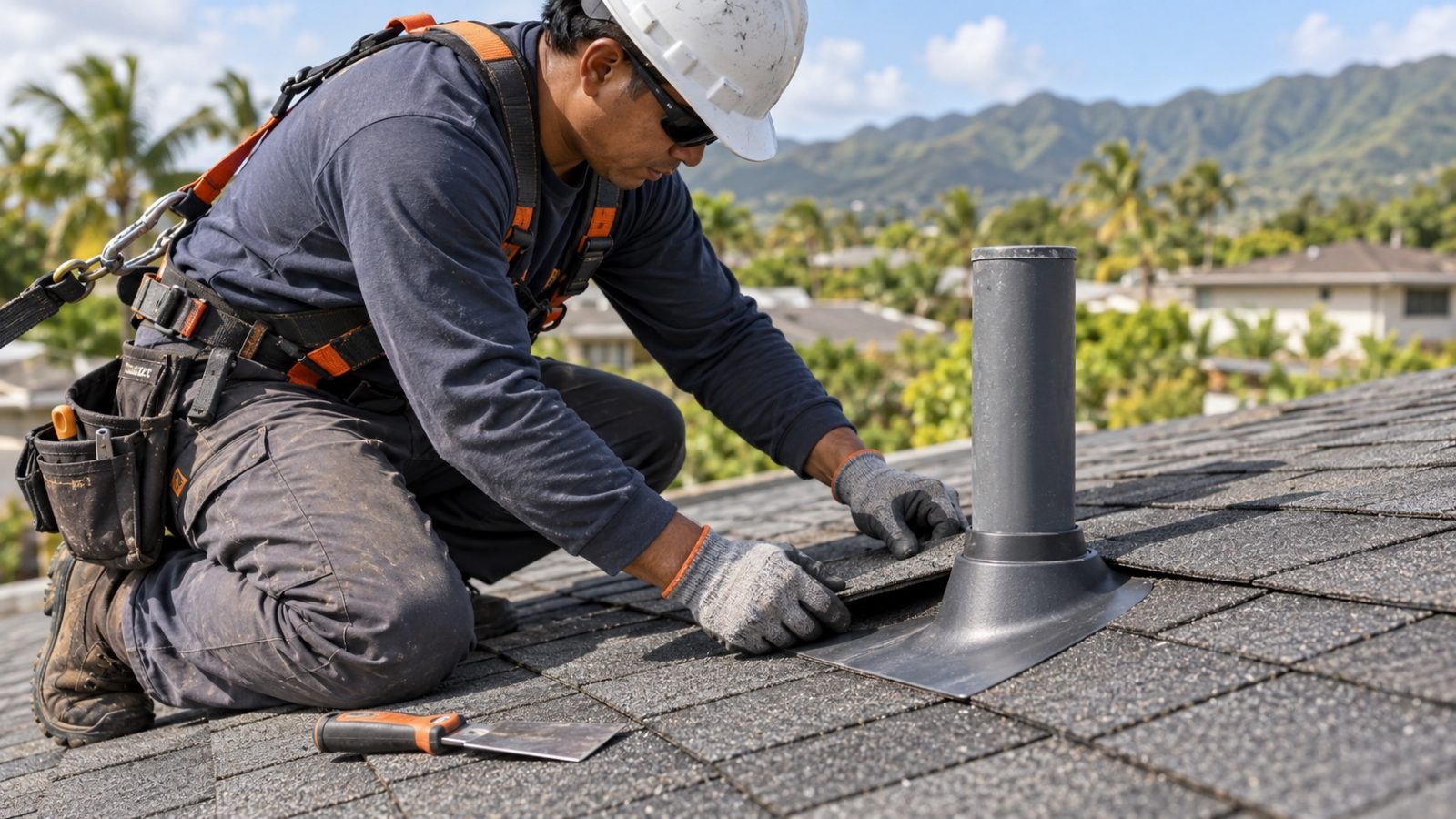
We begin by understanding the roofing problem and its likely source. When a targeted repair is appropriate, we explain that option rather than assuming a complete roof replacement is necessary.
We understand the practical roofing concerns associated with Hawaii's sun, rainfall, humidity, and wind exposure. We consider these conditions when discussing repair needs.
We explain what we find, what work may be needed, and what factors affect the estimate. Our goal is to make roofing decisions easier to understand.
We handle repair inquiries involving shingle, tile, and flat roofing systems, as well as flashing and other common roof details.
A visible ceiling stain does not always identify the exact entry point. We consider surrounding roofing components and water pathways when evaluating a leak.
We approach residential work with care for the home, surrounding areas, and the homeowner's time. We discuss the proposed work before proceeding.
Common warning signs include ceiling stains, damp attic areas, missing shingles, cracked tiles, loose flashing, and water appearing after rain. Some roofing problems are not visible from the ground. A professional assessment can help identify the source and determine whether a repair is appropriate.
Yes, roof leak repair is one of our featured services. We assess likely water-entry points, including roofing materials, flashing, roof penetrations, and nearby details. The repair approach depends on the roof's material and condition.
We accept inquiries for urgent roofing problems, including active leaks and visible storm damage. Availability depends on conditions, access, and scheduling. Temporary protection may be appropriate until permanent repairs can be completed.
Roof repair costs depend on the material, damage, accessibility, and amount of work required. A small flashing repair is different from extensive water damage or multiple damaged roof sections. We recommend obtaining an estimate based on the actual condition of your roof.
We feature both tile roof repair and shingle roof repair. Tile cracks, displaced materials, deteriorated underlayment, and damaged shingles require different repair approaches. The roof's age and surrounding condition also affect the recommended work.
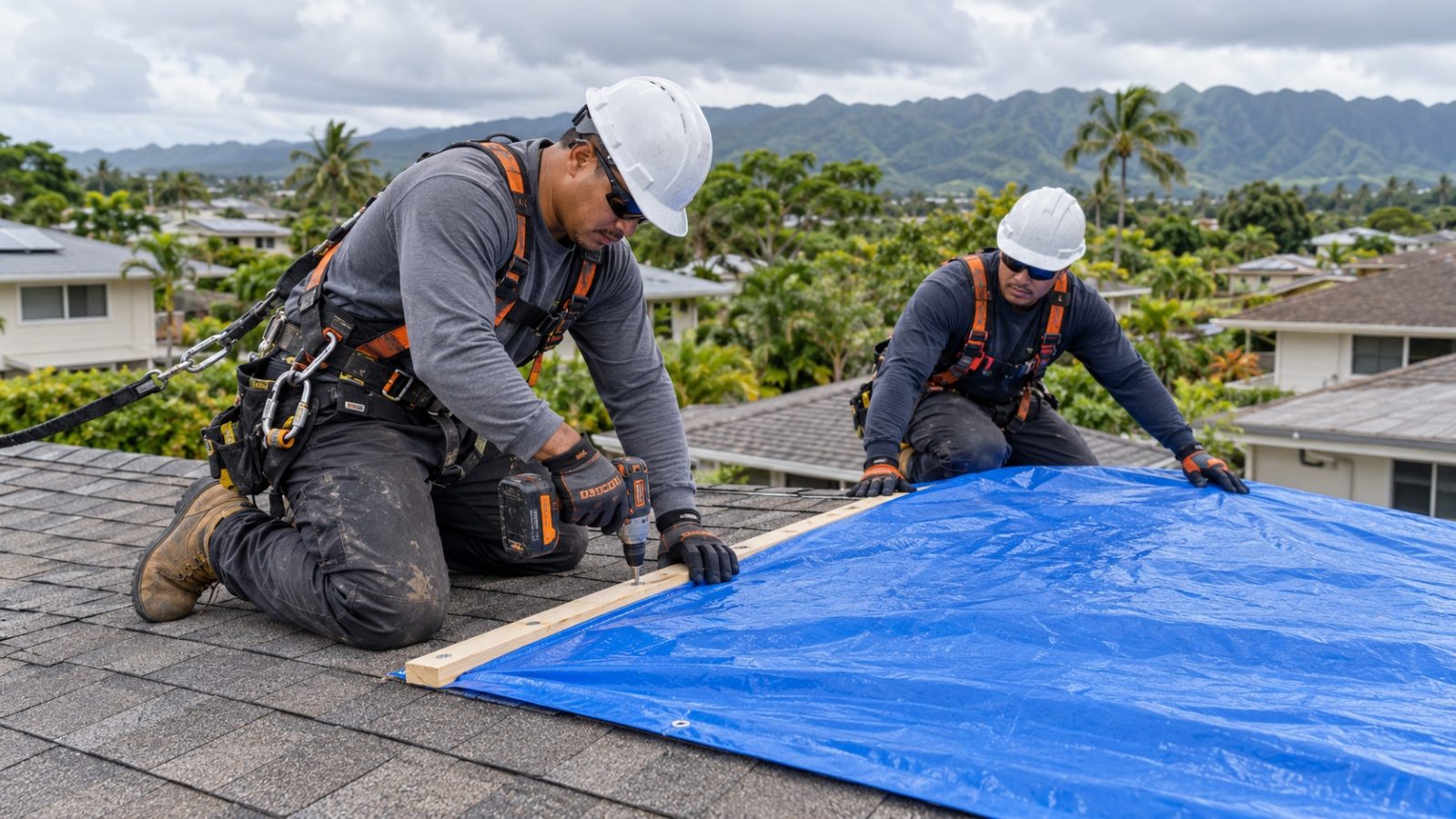
Not sure what is causing the problem? Describe what you have noticed and let us help you understand the next step.
Free — no obligations